
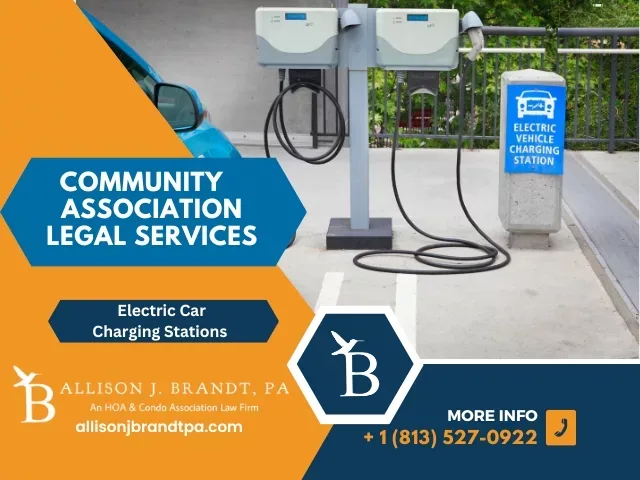
More owners drive electric vehicles every year, and more of them ask their association whether they can install a charger at home. In Florida the answer depends first on whether the community is a condominium or a homeowners' association.
Condominiums: A Statutory Right, With Conditions
For condominiums, § 718.113(8) of the Florida Statutes says a declaration or restrictive covenant may not prohibit a unit owner from installing an electric vehicle charging station within the boundaries of the owner's limited common element parking area. The right comes with conditions set out in the statute: the owner pays for installation, operation, maintenance, electricity and removal; the installation must meet safety codes and the association's reasonable architectural standards; and the owner must carry the insurance and accept the responsibilities the statute lists. Separately, § 718.113(9) allows a condominium board to install and operate charging stations on the common elements.
Homeowners' Associations: The Governing Documents Control
Chapter 720, which governs homeowners' associations, has no matching right-to-charge provision, and there is no federal rule that overrides an association's restrictions on EV chargers. In an HOA, whether an owner may install a charger, and where and how, depends on the declaration, the architectural guidelines and any approval process the board has adopted. Boards should apply those standards consistently and in writing.
Questions Boards Should Answer Before Approving Chargers
- Do the governing documents already address chargers, exterior equipment or electrical work?
- Who pays for installation, electricity, maintenance and removal?
- What insurance and licensed-contractor requirements apply?
- Will common-area chargers be shared, metered or reserved, and how will costs be allocated?
Incentives
Federal and utility incentives for home charging equipment change often, and some federal tax credits have ended. Owners should confirm current incentives with their tax adviser and their electric utility before relying on them.
How an Attorney Can Help
An association attorney can review your documents, draft EV charging rules or amendments, prepare installation agreements that protect the association, and help condominium boards comply with § 718.113. Brandt Law, P.A. advises Florida condominium and homeowners associations on these questions.